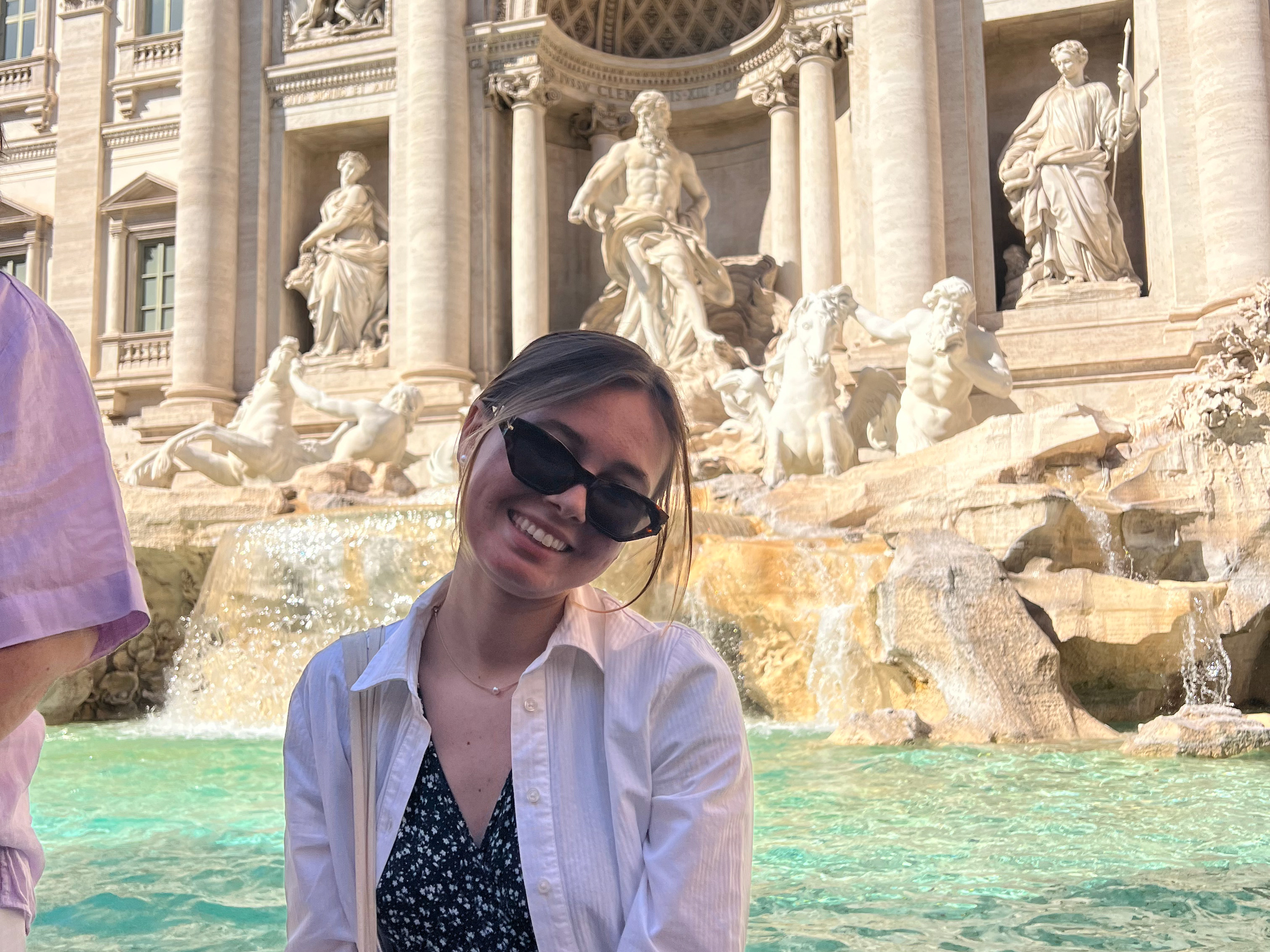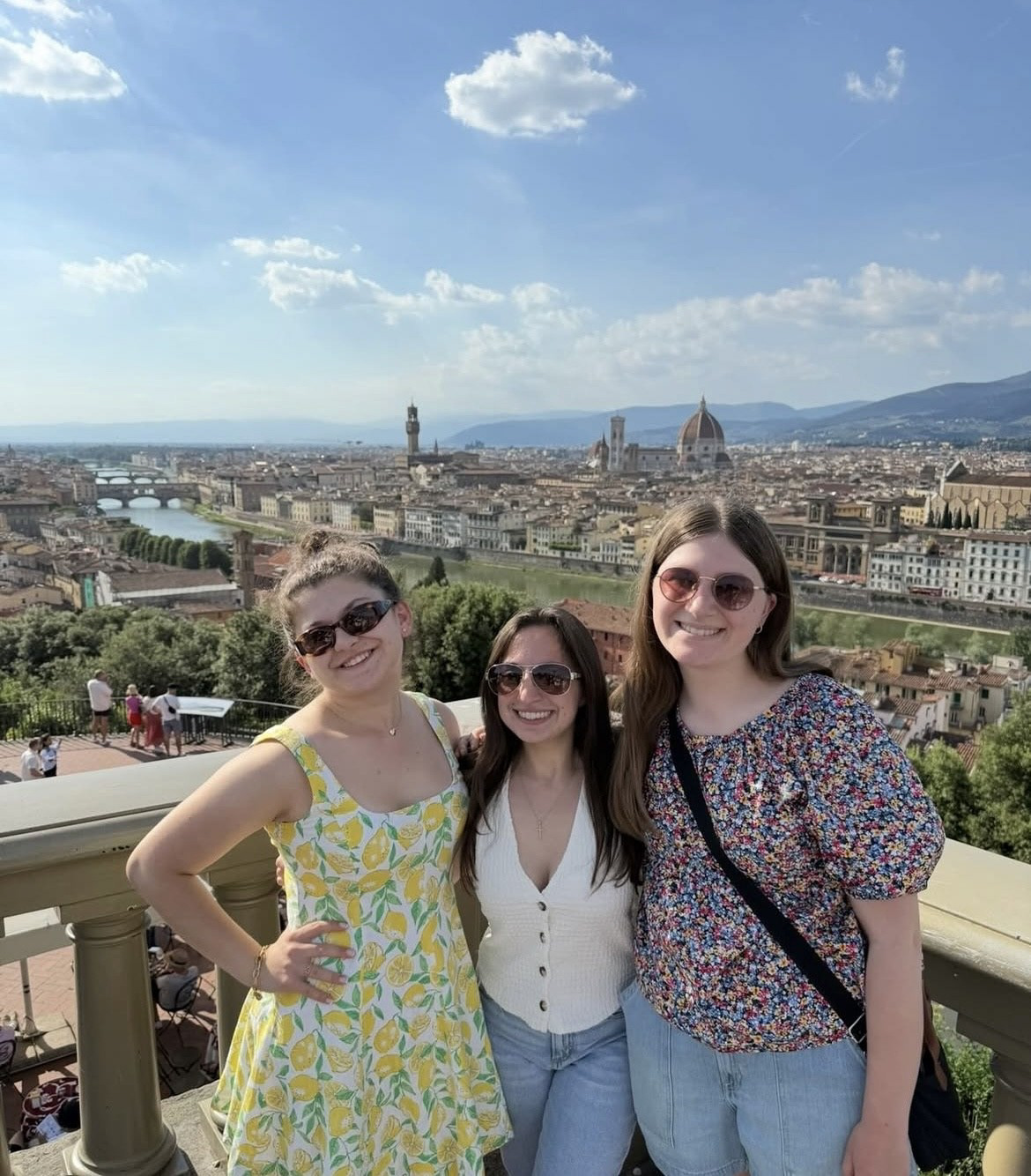
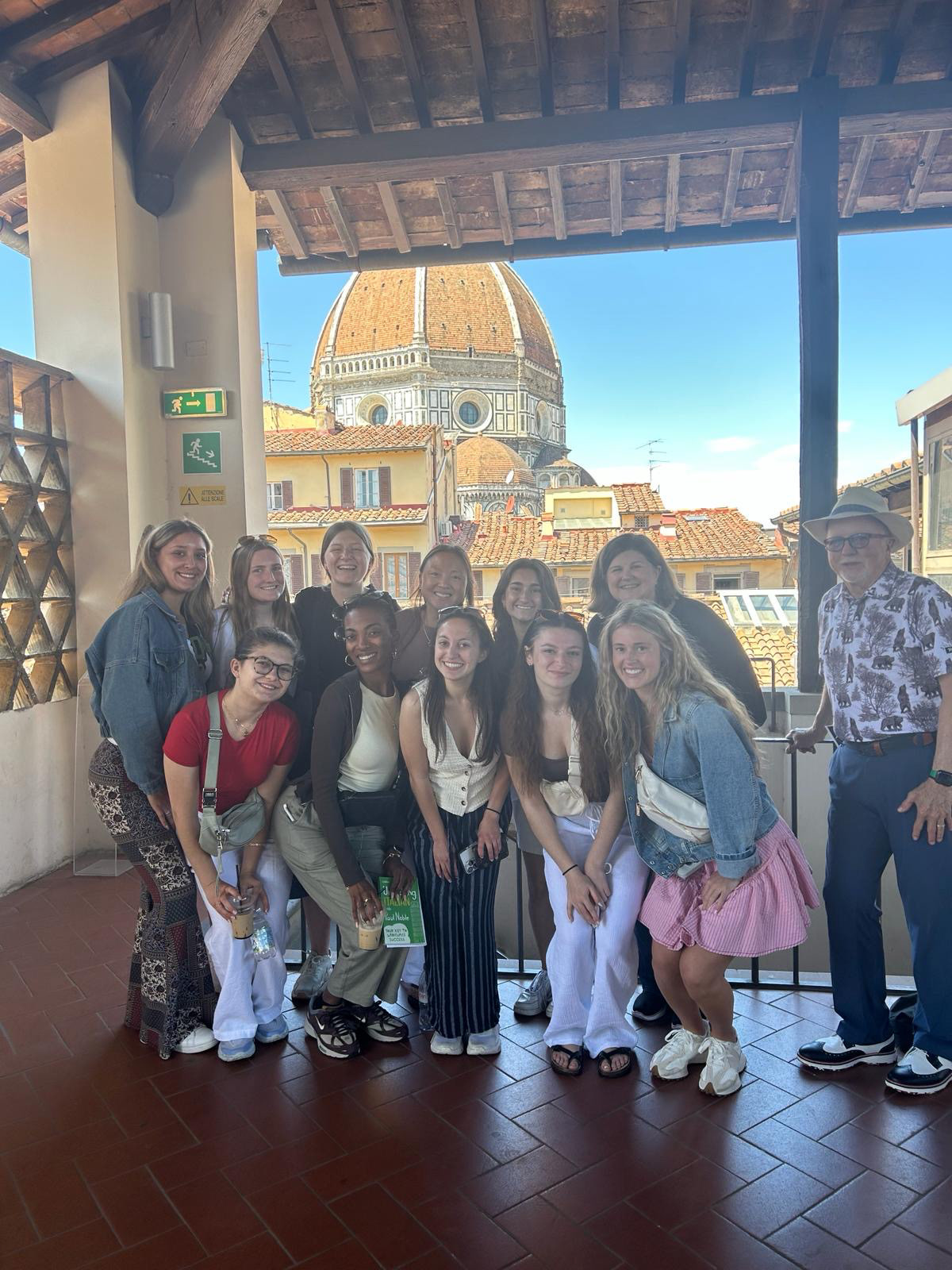
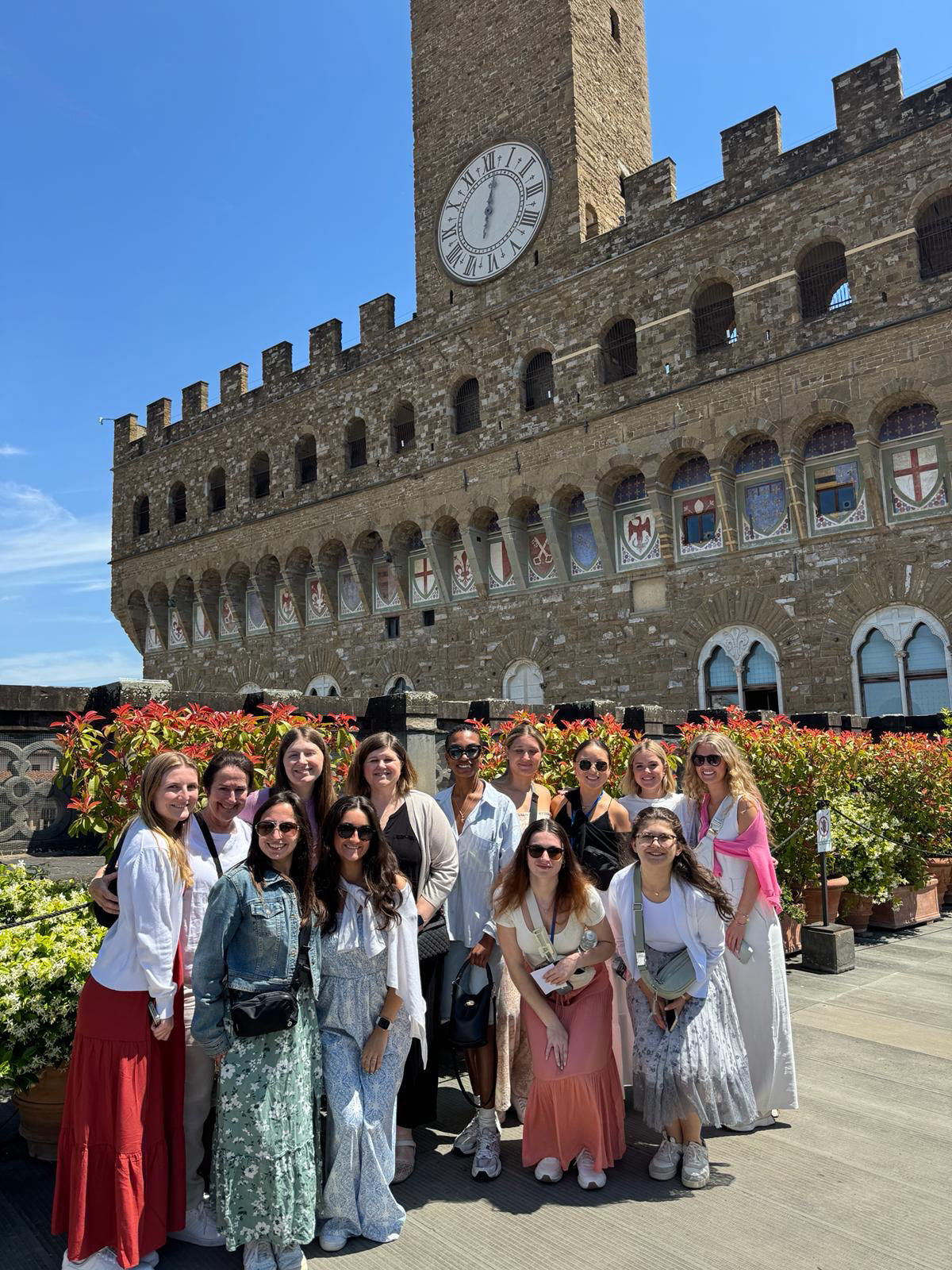
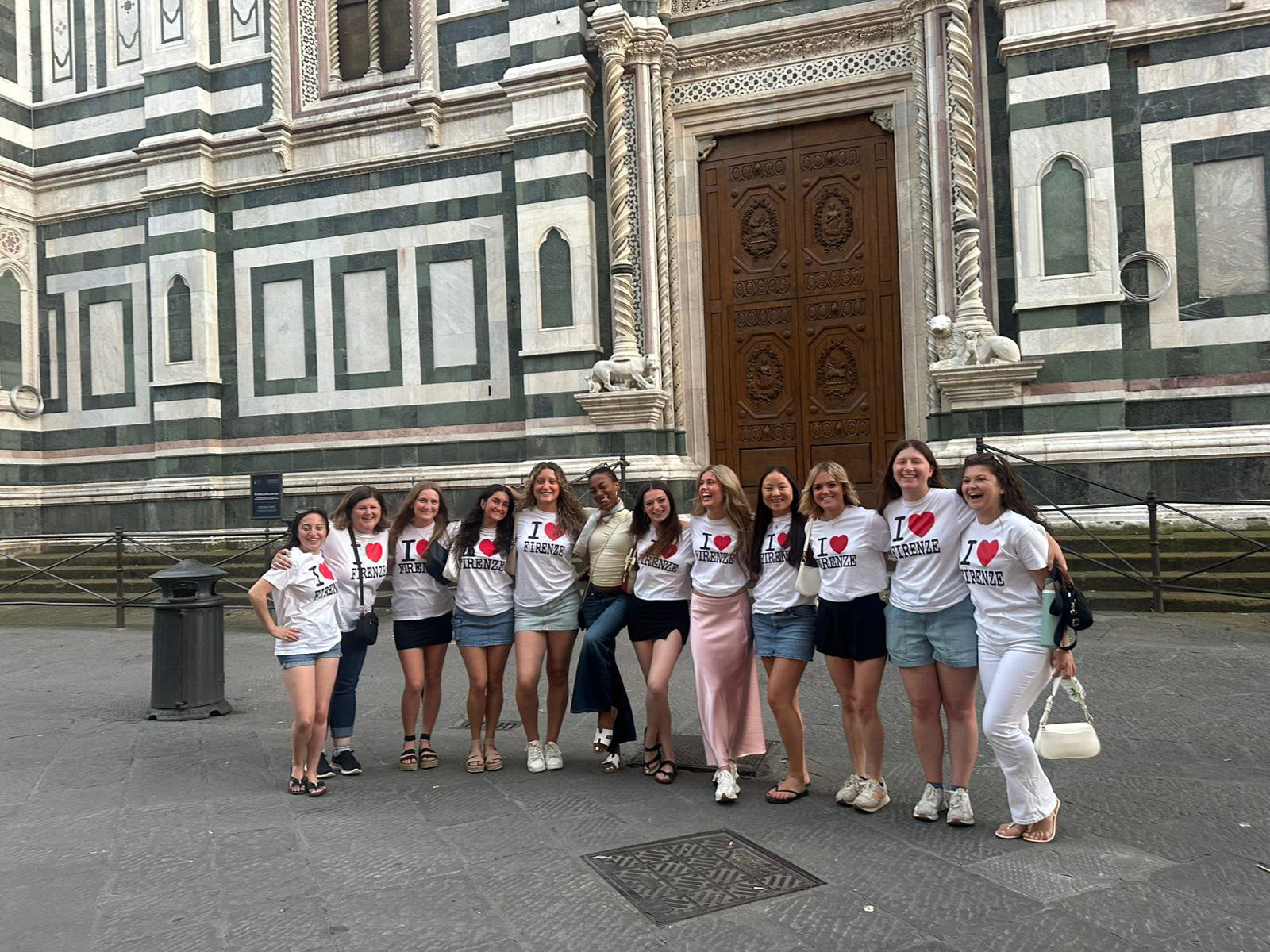
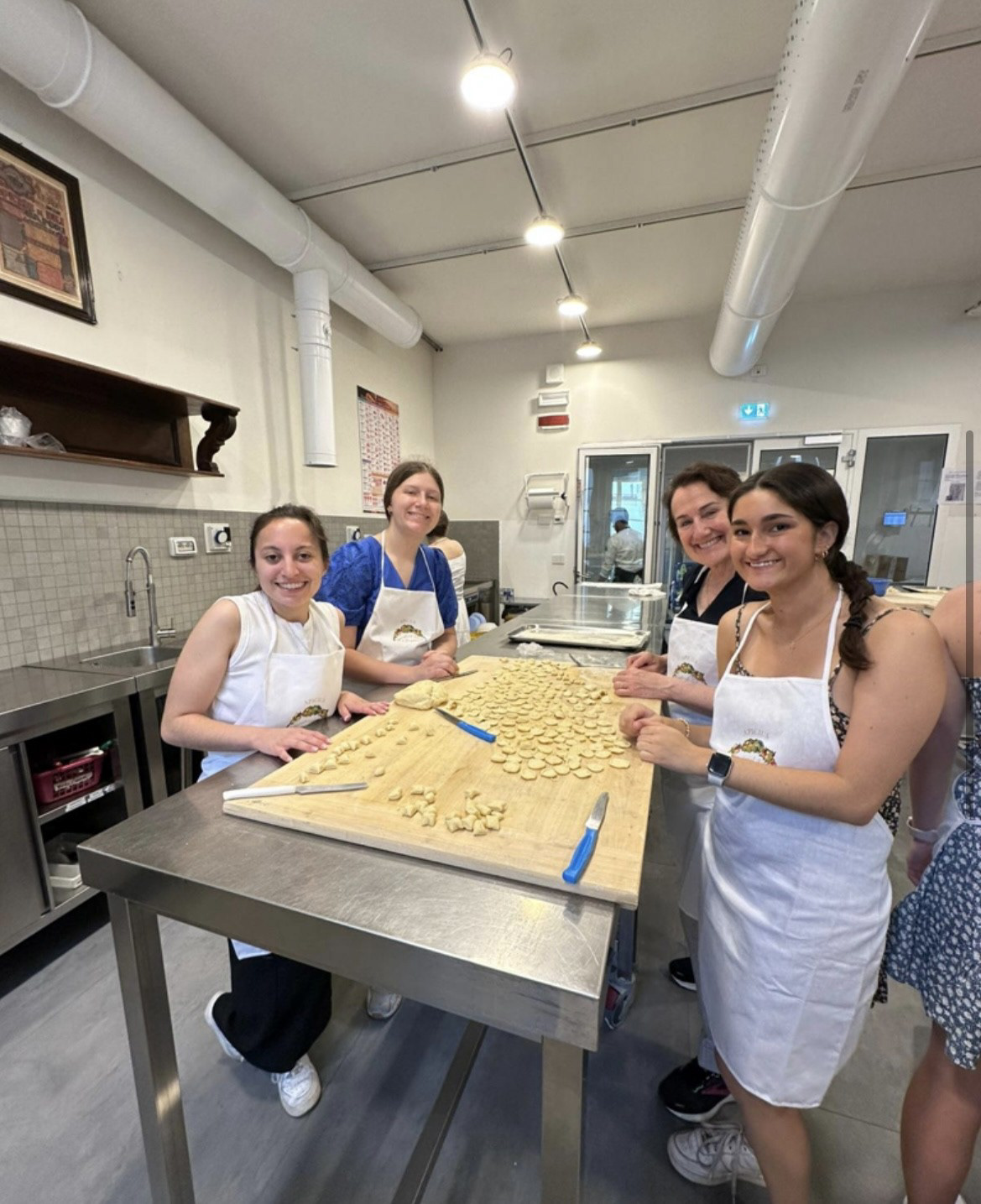
When senior psychology major Katherine Dobbie signed up for a faculty-led course on Palliative Care Communication in Florence, Italy, she knew it would be an educational experience. What she didn’t expect was just how personal and transformative it would become.
The program, led by Dr. Pagano and Dr. O’Shea, combined asynchronous coursework with an immersive one-week visit to Florence. While the lectures focused on healthcare communication, the real learning happened in the field—visiting hospitals, nursing homes, and nonprofit organizations, all while engaging in reflective cultural study through a method called autoethnography.
“We were only there for a week, but we were encouraged to fully immerse ourselves in the culture,” said Katherine. “We looked at both verbal and nonverbal differences between U.S. and Italian healthcare practices—and daily life.”
One of the most striking differences Katherine noticed was the approach to patient care.
“In the U.S., healthcare often follows a biomedical model, focusing on the illness. But in Italy, I saw a much more patient-centered, biopsychosocial approach,” she explained. “It felt more human. Even in nursing homes, you could see how deeply they cared about each person.”
Each day brought a new experience, but one stood out in particular. The group visited a nonprofit organization for pediatric oncology patients—a deeply emotional, yet inspiring part of the trip.
“They showed us rooms where families of children with cancer could stay, completely for free. That’s not always the case here in the U.S.,” Katherine said. “Hearing from the founders and seeing the care behind it—it was beautiful.”
Another highlight? Dancing with residents at a local nursing home.
“It was one of my favorite memories. We danced, joined in their activities, and even asked them to share life advice. It was such a touching, joyful moment.”
Katherine’s interest in the program was sparked by an earlier encounter with Dr. Pagano, who introduced her to Memory Cafés, a Fairfield initiative that brings people together to discuss aging and end-of-life topics in a supportive setting.
“As a psychology major considering a career in nursing, this program felt like the perfect bridge,” she said. “It opened my eyes to what compassionate care looks like in different parts of the world.”
Despite the short stay, cultural learning was constant. Katherine noted how collectivist values shaped healthcare and daily life in Italy, and how different the pace and priorities felt compared to the U.S.
“Even their emergency services were surprising—many EMTs were volunteers. That’s just not something you typically see here.”
As for language barriers?
“I don’t speak much Italian—just a lot of ‘ciao!’—but people were really accommodating,” she laughed. “Everywhere we went, someone was able to translate or communicate with us. It never felt like a barrier.”
As Katherine heads into her final year at Fairfield, she carries not just memories, but a deeper understanding of what kind of care professional she hopes to become.
“This experience taught me so much—not just about healthcare systems, but about myself. I realized I want to be part of something that puts people first.”
Are you interested in exploring study abroad programs or faculty-led courses? Visit the Global Fairfield website, attend an upcoming event or information session and talk to your academic advisor to learn more about upcoming opportunities. You never know where one week could take you!